Wireless Earbuds Iphone Specs, Features, and Value: Is it worth the price tag?
Introduction
The modern smartphone audio market is crowded with true wireless earbuds designed to pair seamlessly with iPhone. The "Wireless Earbuds Iphone" — positioned as a product tailored for Apple users — promises the convenience of cable-free listening, tight integration with iOS features, and a mix of premium audio technologies. This article examines what buyers can realistically expect from such earbuds, analyzes the technical specs and real-world features, compares them against common alternatives, and evaluates whether the asking price typically reflects the value offered.
Product overview and positioning
The Wireless Earbuds Iphone target iPhone owners who want a balance of sound quality, usability, and ecosystem conveniences. In product positioning terms, they usually fall into one of three categories: premium (feature-rich, high price), mid-range (solid features at a moderate price), or budget (basic functionality and lower cost). For iPhone-focused earbuds, priority features often include codec compatibility with iOS (AAC), low-latency connections, easy pairing with Apple devices, and software features such as spatial audio, quick device switching, or Siri integration.
What buyers typically care about
- Sound quality and tuning for different music genres
- Battery life for daily use and travel
- Active noise cancellation (ANC) and transparency modes
- Comfort and seal — especially for workouts and long commutes
- Call quality and microphone performance
- Durability and water/sweat resistance
- How well they integrate with the iPhone and iOS features
- Price and perceived value compared to competitors
Detailed specs and what they mean in practice
When evaluating earbuds that claim to be ideal for iPhone users, the following technical specifications are most relevant. Each spec is followed by a practical explanation of how it affects daily use.
Bluetooth version and connectivity
Typical spec: Bluetooth 5.x (5.0–5.3).
Why it matters: Newer Bluetooth versions mean more stable connections, wider range, and better power efficiency. For iPhone users, stable pairing and quick re-connection when switching between phone, tablet, and laptop are important. Bluetooth improvements also reduce dropouts during calls or video streaming.
Codec support
Typical spec: AAC and SBC; sometimes aptX family supported for non-Apple devices.
Why it matters: iPhones prefer AAC for higher-quality Bluetooth audio. If a set supports AAC, users will generally get better quality than with SBC alone. For gamers and video watchers, codec and implementation affect latency — lower latency leads to tighter lip-sync.
Drivers and tuning
Typical spec: 6–11 mm dynamic drivers, or balanced armature hybrids for higher-end models.
Why it matters: Driver size and type influence bass response and detail. A 6–8 mm driver is common in compact designs and can deliver a punchy sound if the tuning emphasizes bass. Mid and high frequencies (vocals and instruments) rely more on tuning and cross-over design than driver size alone.
Active noise cancellation (ANC) and transparency
Typical spec: Hybrid ANC with feedforward and feedback mics; transparency or ambient modes adjustable via app.
Why it matters: Effective ANC matters for commuting, air travel, and noisy offices. Transparency mode is essential when users need to hear announcements or have quick interactions without removing earbuds. ANC performance and the comfort of transparency tuning are major differentiators among models.
Battery life and charging
Typical spec: Earbuds: 4–8 hours per charge; charging case: additional 12–30+ hours. Fast-charging features common.
Why it matters: Daily commuters expect at least a full workday from earbuds plus the case to get through several days. Fast-charging (e.g., 10–15 minutes for an hour of playback) is helpful for rushed mornings. Wireless charging and MagSafe support are conveniences for iPhone users but add to cost.
Shop the latest Audio & Headphones picks on Amazon.
View Offers →Water resistance and durability
Typical spec: IPX4 to IP68 ratings.
Why it matters: For workouts and outdoor use, sweat and rain resistance are important. IPX4 covers sweat/rain; higher ratings such as IP67/IP68 indicate better protection against dust and brief submersion.
Microphones and call quality
Typical spec: Multiple MEMS microphones with beamforming and noise reduction.
Why it matters: Clarity on phone calls and during video meetings is a high priority for many buyers. Multiple mics, directional pickup, and intelligent noise suppression influence how well the other party hears the user in windy or noisy environments.
Features commonly marketed for iPhone-focused earbuds
Beyond raw specs, several features are emphasized when earbuds are marketed to iPhone owners:
- Quick pairing and seamless switching: Integration with iOS's audio switching and device list for fast transitions between iPhone, iPad…
Commuting and travel
For daily train or bus riders, ANC, battery life, and comfort top the list. Effective ANC reduces engine and chatter noise, making podcasts and music clearer. A charging case that provides multiple charges is highly valuable for travelers who may not have power access during the day.
Work-from-home and calls
Professionals need reliable microphone performance and stable connections for video conferences. Low-latency Bluetooth behavior, clear voice pickup, and comfortable fit for multi-hour wear are critical.
Exercise and outdoor activities
Buyers who exercise look for secure fit (earhooks, stabilizers), IP-rating for sweat resistance, and long battery life. Transparency mode is useful for outdoor safety — hearing traffic while listening.
Casual listening and media consumption
For movies and streaming, spatial audio and low-latency performance improve immersion. Sound signature (balanced vs. bass-forward) influences whether listeners prefer the earbuds for genres like classical, pop, or EDM.
Comparison table
Feature Wireless Earbuds Iphone Typical Premium Competitor Typical Budget Alternative iPhone Integration Optimized (AAC, iOS switching, Siri) Optimized + advanced spatial features Basic AAC/SBC support Active Noise Cancelling Hybrid ANC (good for most environments) Industry-leading ANC with adaptive modes Limited or no ANC Battery (earbuds / case) 5–6 hrs / 20–24 hrs 6–8 hrs / 24–36 hrs 4–5 hrs / 12–20 hrs Water resistance IPX4–IPX5 (sweat/rain) IPX4–IP67 (varies) IPX4 or none Call quality Good (beamforming mics) Excellent (multiple adaptive mics) Acceptable (may struggle in wind) Companion app Yes — EQ and ANC tuning Yes — granular customizations Limited or none Price range Mid-to-premium Premium Budget Pros & Cons
- Pros:
- Designed with iPhone compatibility in mind: reliable AAC performance and quick device switching.
- Balanced set of features: ANC, transparency mode, and useful companion app controls.
- Convenient form factor and charging case provide day-to-day portability.
- Good microphone performance for most indoor and some outdoor call scenarios.
- Feature set often includes convenience extras like wireless/MagSafe charging and fast-charge support.
- Cons:
- Higher price than generic wireless earbuds; premium features add cost.
- Sound tuning may prioritize a mainstream profile (bass-forward) rather than audiophile neutrality.
- ANC and microphone effectiveness vary by environment and may not match top-tier competitors.
- Fit can be subjective — some users may need additional tips or different ear tips for a secure seal.
- Software-dependent features require firmware updates and ongoing app support to remain competitive.
Buying guide: How to decide if these earbuds are right for an iPhone user
When weighing whether the Wireless Earbuds Iphone are worth the price tag, evaluate the following factors tailored to individual needs.
1. Prioritize use case
If primary use is commuting and travel, focus on ANC quality and battery life. For workouts, prioritize fit and water resistance. For frequent calls, microphone technology and voice isolation matter most.
Looking for the best Audio & Headphones deals on Amazon?
Shop Amazon →2. Check real-world battery performance
Advertised battery numbers are often measured at moderate volume and with ANC off. Look for third-party reviews or user reports that show battery life under heavier usage and with ANC enabled.
3. Evaluate fit and comfort
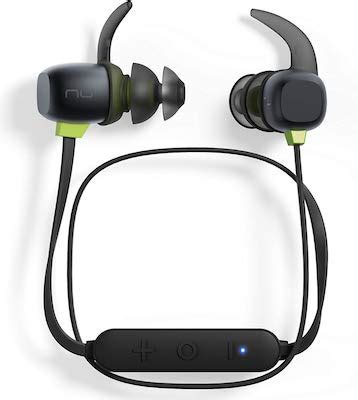
Ear tip varieties, winged stabilizers, and the overall stem/shape determine long-term comfort. If possible, try earbuds in-store or purchase from a retailer with a flexible return policy. A good seal not only improves comfort but also dramatically enhances bass and ANC performance.
4. Software and firmware support
Earbuds that receive frequent firmware updates will improve over time — refining connectivity, ANC, and call algorithms. Confirm whether the manufacturer maintains an app with active updates and a history of improvements.
5. Consider ecosystem features
For iPhone users, convenience features like one-tap pairing, device switching, Siri access, and support for spatial audio may be worth a premium. Buyers who frequently switch between Apple devices will value tight integration more than single-device users.
6. Compare to competitors
Compare audio signature, ANC performance, battery life, and warranty against both premium and budget rivals. Sometimes mid-range earbuds offer 80–90% of flagship performance at a significantly lower price.
7. Latency and gaming
If gaming or watching low-latency video is important, test or look for specifications about gaming/low-latency modes. Not all earbuds implement low-latency codecs on iPhone due to platform constraints, so real-world latency tests are useful.
8. Price vs. long-term value
Assess whether included conveniences — like wireless charging, durable build, and reliable ANC — justify the cost. A higher upfront price can be worthwhile if the earbuds reliably meet daily needs and last several years with software support.
Practical tips for getting the most value
- Use the companion app to customize EQ and ANC settings rather than relying on default presets.
- Experiment with different ear tips to find the best seal; this often improves bass and ANC noticeably.
- Keep firmware up to date to take advantage of performance and stability improvements.
- If call quality is inconsistent outdoors, test placement and consider using the microphone nearer to the mouth (e.g., with a small boom accessory in niche cases).
- Reserve ANC for noisy environments — disabling it while at home can extend battery life significantly.
Value assessment: Is it worth the price tag?
Whether Wireless Earbuds Iphone are worth their price depends on the buyer's priorities. For iPhone users who value seamless integration, convenience features like fast pairing and spatial audio, and a bundled feature set of ANC, wireless charging, and reliable battery life, paying a premium can deliver tangible daily benefits. Those who prioritize pure audio fidelity for music production or critical listening may prefer wired options or higher-end audiophile-grade in-ear monitors. Budget-conscious shoppers should consider that many mid-range earbuds deliver very good real-world performance at a lower cost, sacrificing some convenience features rather than core audio performance.
In short, the product tends to provide good value for users who will make use of the iOS-specific integration and daily conveniences. For users who only want basic playback and long battery life without ecosystem bells and whistles, lower-cost alternatives may offer better price-to-performance.
Conclusion
The Wireless Earbuds Iphone aim to balance Apple-centric convenience with modern audio features. They generally perform well for daily commuting, calls, and casual listening, delivering a blend of ANC, solid microphone performance, and iPhone-friendly features that justify a mid-to-premium price for many buyers. Ultimately, the decision hinges on how much weight a buyer places on ecosystem integration, ANC efficiency, and in-field comfort. For those who rely on seamless device switching, hands-free Siri, and immersive spatial features, the added cost is often justified. Buyers focused purely on raw sound for critical listening or those on a tight budget should compare alternatives carefully before purchasing.
- Pros: