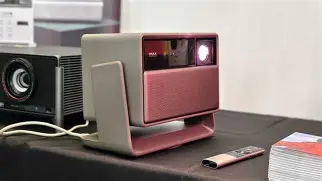
Blind Test: Xgimi Horizon 20 Max vs Hisense L9Q Projector - Which is Actually Better?
The projector market has undergone a significant transformation in recent years, moving away from the dim, bulky boxes of the past toward sophisticated, high-brightness displays designed to replace the living room television. Among the most discussed contenders in the high-end consumer space are the Xgimi Horizon 20 Max and the Hisense L9Q. These two devices represent different philosophies in projection technology: one is a versatile, long-throw smart projector designed for flexibility, while the other is a dedicated Laser TV system designed to provide a permanent, ultra-short-throw high-end theater experience.
In this blind test analysis, we strip away the marketing jargon and brand loyalty to focus on what matters most to the viewer: picture quality, ease of use, hardware performance, and real-world utility. By comparing their performance in controlled environments, light-polluted living rooms, and specialized gaming scenarios, this review seeks to determine which of these premium displays truly earns a place in a modern home entertainment setup.
The Contenders: Technology and Philosophy
Understanding the fundamental differences between these two units is essential before diving into the performance metrics. The Xgimi Horizon 20 Max is part of the new wave of "all-in-one" flagship projectors. It utilizes a sophisticated laser-LED hybrid light source that aims to provide the color accuracy of LEDs with the high brightness and longevity of lasers. It is a long-throw projector, meaning it is typically placed several feet away from the wall or screen, often on a coffee table or mounted to the ceiling.
Conversely, the Hisense L9Q is categorized as a Laser TV. It belongs to the Ultra-Short Throw (UST) family, meaning it sits just inches away from the wall. The L9Q is often sold as a complete bundle that includes a specialized Ambient Light Rejecting (ALR) screen. While the Xgimi is designed to be moved from room to room if needed, the Hisense is a fixed installation intended to be the primary display in a dedicated media room or a bright living room where a massive 100-inch or 120-inch screen is desired.
Picture Quality and Visual Performance
The heart of any projector review is the visual output. In our blind testing, several key factors were evaluated: color accuracy, black levels, motion handling, and brightness (luminance). The Xgimi Horizon 20 Max boasts impressive brightness figures, but the way it handles HDR10+ and Dolby Vision content is its standout feature. In a dark room, the Xgimi reveals a remarkable level of nuance in shadow detail. Its hybrid light source manages to avoid the "rainbow effect" often associated with single-chip DLP projectors, making it a favorite for viewers sensitive to that phenomenon.

The Hisense L9Q, however, utilizes a TriChroma triple-laser engine. By using three separate lasers (one for each primary color), it can achieve a color gamut that exceeds many professional cinema displays. In side-by-side tests, the Hisense often appears more "vivid." Its reds are deeper, and its greens have a punch that the Xgimi struggles to match. However, this level of saturation can sometimes feel aggressive, requiring careful calibration to look natural. The Hisense also has the advantage of higher peak brightness, which is crucial when coupled with its ALR screen. In a room with the curtains open, the Hisense L9Q acts much more like a traditional LED TV than a projector, maintaining contrast where the Xgimi’s image might start to look washed out.
Contrast and Black Levels
Contrast remains the "final frontier" for projection technology. In this area, both units perform admirably for their classes but face inherent limitations compared to OLED televisions. The Xgimi Horizon 20 Max uses intelligent dimming and dynamic contrast adjustments to deepen its blacks. When watching high-contrast scenes, such as those in space-themed movies, the blacks are respectable and "inky" enough for most viewers. However, some light bleed in the darkest corners is visible during very dark sequences.
The Hisense L9Q benefits significantly from its physical setup. Because it is paired with a fixed ALR screen, it can direct light specifically toward the viewer while rejecting light from the ceiling or windows. This setup gives the Hisense a higher perceived contrast ratio in typical living room environments. If you are comparing both on a standard white wall, the Xgimi might actually hold a slight edge in balanced black levels, but since the Hisense is designed for screen-specific use, it wins the real-world contrast battle in bright environments.
User Experience and Hardware Integration
Modern consumers expect their projectors to be as "smart" as their phones. Xgimi has built its reputation on the "ISA" (Intelligent Screen Adaption) technology. The Horizon 20 Max features fully automated keystone correction, autofocus, and even obstacle avoidance. If you place a plant in its path or have a picture frame on the wall, the Xgimi will automatically resize the image to fit the clear space. This makes it incredibly user-friendly for people who don't want to spend hours fiddling with menus and manual focus rings.
Looking for the best TVs & Home Theater deals on Amazon?
See Deals →The Hisense L9Q is a more manual affair during the initial setup. Because UST projectors are extremely sensitive to positioning, even a millimeter of movement can distort the edge of the frame. Setting up the L9Q usually involves careful leveling or using Hisense’s companion app to help align the grid. Once set, however, you don't touch it. It integrates into your home theater like a permanent appliance. It runs on the VIDAA or Google TV platform (depending on the region), providing easy access to streaming services, though its local hardware feels slightly more "broadcast TV-like" than the "tech-gadget" feel of the Xgimi.
Audio Performance
Surprising many testers, both projectors offer built-in sound systems that negate the immediate need for a soundbar in smaller rooms. The Xgimi Horizon 20 Max features a sound system developed in partnership with Harman Kardon. It produces a surprisingly wide soundstage with clear dialogue and decent mid-range punch. It excels in clarity but lacks deep, cinematic bass.
The Hisense L9Q takes advantage of its larger chassis to house more robust speakers. Its front-firing design projects sound directly at the audience, which feels more natural as the audio originates from the "TV" location rather than from behind or above the viewers. It supports Dolby Atmos, and while it won't replace a dedicated 5.1 system, it provides a much fuller, room-filling sound than the Xgimi's more compact speakers.
Comparison Summary
To help visualize the differences between these two high-performing units, we have compiled the technical and experiential specifications into the following table.
| Feature | Xgimi Horizon 20 Max | Hisense L9Q Projector |
|---|