A Professional's Take on the New Symfonisk Speaker Lamp
Introduction
The Symfonisk Speaker Lamp represents an ongoing effort to bridge two often-separate domains of the modern home: ambient lighting and distributed audio. For many buyers—apartment dwellers, designers furnishing multi-purpose rooms, and listeners who want clean, simple multi-room audio without clutter—the appeal is obvious: one object that solves two problems. This article offers a measured, professional evaluation of the Symfonisk Speaker Lamp, focusing on design, sound performance, real-world use cases, integration with existing systems, and the purchasing considerations that matter most to prospective buyers.
Design and Build
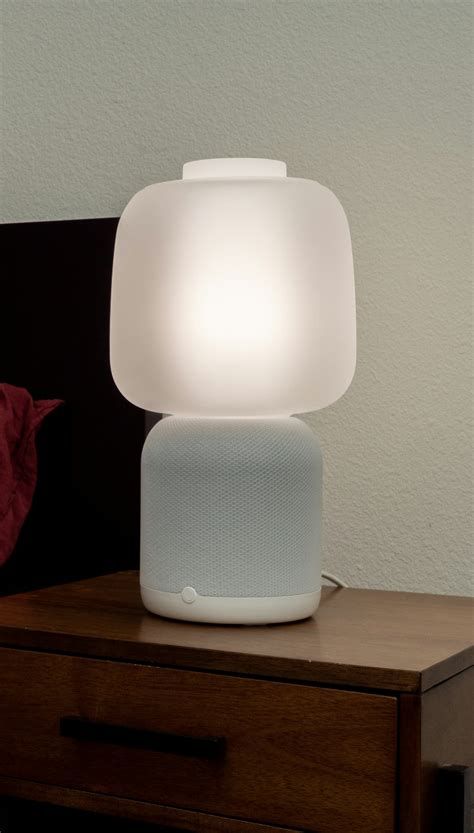
At first glance, the Symfonisk Speaker Lamp is a study in functional minimalism. The lamp places the audio hardware in its base, keeping the shade and stem visually familiar and unobtrusive. Materials typically lean toward matte plastics and metal finishes intended to blend with neutral modern interiors. The shade design controls light dispersion and reduces direct glare—important for bedside or reading applications—while the base houses the speaker driver and ports.
Build quality is generally solid for a product in this category. Joints and fastenings are engineered for simple assembly, and the lamp's footprint is sized to work as a bedside or side-table lamp without overwhelming small surfaces. Cable management is not a glamour point, but practical routing options in the base help keep cords tidy. Buyers who prioritize premium materials (brushed metal, solid wood) should inspect finishes in person; this product is designed to prioritize functionality and integration over luxury materials.
Sound Quality and Performance
The most important question for anyone considering a speaker lamp is: how does it sound? The Symfonisk Speaker Lamp aims to deliver balanced, room-filling sound appropriate for background music and everyday listening rather than high-end, reference-grade fidelity. The speaker design emphasizes midrange clarity—voice and acoustic instruments come through cleanly—which is appropriate for the lamp's typical roles: ambient music, podcasts, and casual listening while reading or working.
Bass extension will be more limited than a dedicated floor-standing speaker or a bookshelf speaker paired with a subwoofer. Because the speaker is built into a compact base, low frequencies are constrained by the enclosure volume. That said, for most casual listeners who value convenience and multi-room capability, the bass is competent and rarely overwhelms the listening experience. The trade-off between form factor and low-end impact is expected and, for many buyers, acceptable.
Volume and dispersion are well-suited for small to medium rooms. At higher volumes the speaker can show strain—distortion increases and the tonal balance becomes less natural. In living rooms where loud, dynamic playback is expected, the lamp works best as part of a multi-component system (for example, paired with additional Sonos speakers or a subwoofer) rather than a single primary speaker.
Imaging and Soundstage
Given the physical constraints, the Symfonisk Speaker Lamp produces a respectable soundstage for near-field and mid-field listening. Instruments and vocals are placed with reasonable clarity across the stereo field, particularly when two units are paired for true stereo separation. For single-unit setups the perceived soundstage is centered and intimate—ideal for bedside or desk placement where a wide, room-filling image is not required.
Smart Features and Connectivity
One of the Symfonisk Lamp’s strongest selling points is ecosystem integration. It is designed to play nicely in multi-room setups and to be controlled via the manufacturer’s app and common streaming protocols. For buyers who already use a proprietary multi-room platform, adding the Symfonisk Lamp is usually straightforward: the lamp becomes just another node in a whole-home audio system and participates in synchronized playback, grouping, and voice control (where voice assistants are supported).
Connectivity is primarily network-based; the lamp is optimized for Wi‑Fi streaming rather than Bluetooth. This design choice favors stable, high-quality streams and multi-room synchronization over the short-range convenience of Bluetooth. For users who require occasional Bluetooth streaming from a guest’s phone, this is a consideration: the lamp’s workflow centers on app-driven streaming and the ecosystem’s native protocols.
Controls are a mix of physical and app-based options. The lamp typically provides tactile buttons or touch controls for basic functions—power, play/pause, and volume—while advanced configuration, room grouping, and updates are managed through the companion app. For users who value local control, make sure the physical control layout meets expectations during an in-store evaluation.
Shop the latest Audio & Headphones picks on Amazon.
View Offers →Installation and Daily Use
Setup is intended to be approachable: unpack, assemble the shade and stem, fit a bulb (if required by the model), and follow the companion app’s guided steps to add the lamp to the home network. The process is not unlike adding any modern smart speaker, but buyers should be prepared to have their Wi‑Fi credentials at hand and to place the lamp near the router for initial configuration.
Practical daily use benefits from the lamp's dual-purpose nature. It reduces surface clutter by replacing a separate speaker and lamp, and because the speaker is integrated into a functional object, it is less likely to be accidentally knocked or exposed to spills compared with a tabletop wireless speaker. Users who frequently rearrange rooms should note that the lamp’s audio performance is influenced by placement: proximity to walls, corners, or soft furnishings will affect bass response and perceived balance.
Real-World Use Cases
The Symfonisk Speaker Lamp is well-suited to several common scenarios:
Discover deals on Audio & Headphones — updated daily.
View Offers →5. Connectivity Preferences
Confirm whether the buyer needs Bluetooth for ad-hoc streaming or whether Wi‑Fi and app-based control suffice. If voice assistant integration is important, check the specific model’s support and how voice control is routed (local vs. cloud).
6. Aesthetic and Finish
Inspect finish samples where possible. The lamp is designed to be visually discreet, but finish options can affect how well it integrates with a given decor. Consider shade shapes and heights relative to eye lines on bedside or side tables.
7. Future-Proofing
Check for firmware update policies and the manufacturer’s track record with software support. Because smart features and ecosystem compatibility can change over time, a brand that commits to updates provides longer-term value.
Maintenance and Troubleshooting Tips
Routine maintenance is simple: dust the shade and base, and keep the speaker grille free of debris. For audio performance issues, placement is the most common fix—move the lamp a few inches away from walls or tight corners to reduce boominess. If connectivity drops, verify router placement, reduce network congestion, and ensure the companion app and the lamp firmware are up to date.
Who Should Buy It—and Who Shouldn’t
The Symfonisk Speaker Lamp is ideal for buyers who value simplicity, multi-room integration, and a clean aesthetic. It is particularly compelling for small-space living, home offices, and bedside applications where surface area is at a premium.
It is less suited to buyers whose top priority is high-fidelity, loud playback, or deep bass. Anyone building a dedicated listening room or home theater will find better results from separate speakers with larger enclosures and dedicated amplifiers or subwoofers.
Conclusion
The Symfonisk Speaker Lamp occupies a practical middle ground between convenience and capability. It does not aspire to be the last word in audiophile-grade sound—but it succeeds where many hybrid products fail: by providing a genuinely useful combination of lighting and audio without compromising the usability of either function. For buyers who want a tidy, integrated solution that supports multi-room playback and delivers reliable, well-balanced sound for everyday listening, the lamp represents a thoughtful option. Those whose priorities skew toward maximal audio performance should view it as a complementary element rather than a standalone sonic centerpiece. Ultimately, the Symfonisk Speaker Lamp makes a persuasive case for integrating technology into living spaces with modest complexity and clear, everyday benefits.